Stress Relief Strategies: Simple Ways to Feel Better Every Day
Stress is a normal part of life — but when it piles up, it can take a serious toll on your mind, body, and overall well-being. The good news? There are plenty of effective strategies that can help you manage stress, both in the moment and over the long term. Here is a closer look at what works.
Get Your Body Moving
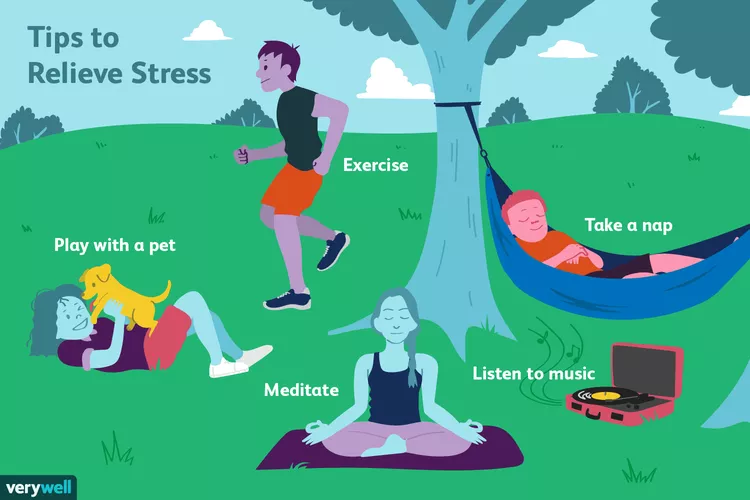
One of the fastest and most effective ways to relieve stress is physical activity. Taking a walk — even a short one — can shift your mindset, give you a change of scenery, and provide immediate mental relief. Research suggests that combining walking with relaxation techniques can be especially powerful.
If you want to go deeper, regular exercise through yoga, hiking, strength training, kayaking, or a spin class can build your body’s long-term resilience to stress. Yoga in particular combines physical movement, controlled breathing, and meditation — making it one of the most complete stress-relief tools available. Even one session can make a noticeable difference.
The Power of Human Connection
Never underestimate the stress-relieving power of a hug. Physical touch — especially hugging someone you love — releases oxytocin, often called the “cuddle hormone.” Oxytocin increases feelings of happiness, lowers blood pressure, and reduces stress hormones in the body. It is one of the simplest and most immediate forms of stress relief available to us.
Beyond physical touch, having a strong support network is essential. Confiding in a friend, family member, or trusted colleague can ease the weight of whatever you are carrying. If your social circle feels thin, consider joining a community group, organization, or support group to expand your connections.
Calm Your Mind
Several mindfulness-based practices can help quiet a stressed and overactive mind:
Meditation — Even a few minutes of meditation each day can reduce stress significantly. You might repeat a calming mantra, focus on slow deep breaths, or simply practice being present in the moment. Over time, meditation builds your ability to respond to stress rather than react to it.
Guided imagery — Think of this as a short mental vacation. Close your eyes and picture yourself in a calm, peaceful place — a beach, a forest, a quiet garden. Engage all your senses in the visualization. Research suggests this practice can reduce stress levels and improve focus.
Progressive muscle relaxation — Starting from your forehead and working down to your toes, tighten and then release each muscle group in your body. With regular practice, you will become more aware of where you hold tension — and better able to let it go.
Breathing exercises — Simple and discreet, breathing techniques can calm your nervous system in just minutes. Try breathing in slowly through your nose for a count of three, holding for one second, and breathing out for another count of three. You can do this anywhere — in a meeting, on public transit, or in a crowded room — and no one will even notice.
Take Care of Your Body
What you put into your body affects how well it handles stress. A poor diet — heavy in refined carbs, sugar, and processed foods — can actually increase your stress reactivity and cause mood-disrupting blood sugar spikes and crashes. Instead, focus on whole foods like eggs, avocado, walnuts, and leafy greens that support mood regulation and sustained energy.
Certain supplements may also help. Melatonin can improve sleep quality, ashwagandha is thought to boost resilience to stress, L-theanine promotes calm and relaxation, and B vitamins may help lower stress and improve mood. Always check with your doctor before starting any supplement routine.
Aromatherapy is another underrated tool — certain scents have been shown to alter brain wave activity and reduce stress hormones. Whether through a candle, a diffuser, or a body product, incorporating calming scents like lavender or eucalyptus into your day can make a real difference.
Feed Your Mind Positively
The way you talk to yourself has a direct impact on your stress levels. Harsh self-criticism, catastrophic thinking, and constant self-doubt pile stress on top of stress. Learning to replace that inner voice with something kinder and more realistic — what psychologists call positive self-talk — can help you manage emotions more effectively and take constructive action even in difficult moments.
Practicing gratitude is equally powerful. Taking time each day to acknowledge what you are thankful for — big or small — has been shown to improve mental health, lower stress, and increase overall quality of life. Try writing down three things you are grateful for each morning or evening to make it a lasting habit.
Creative outlets like drawing, painting, or even adult coloring books can also provide a meditative, stress-reducing effect — and are a great way to reconnect with a part of yourself that often gets buried under life’s demands.
Remove the Source of Stress When You Can
Sometimes the best strategy is not managing your reaction to stress — it is eliminating the stressor itself. This is called problem-focused coping, and it is just as important as any relaxation technique.
Start by reassessing your to-do list. If you are consistently trying to fit more into your day than is realistically possible, something has to give. Delegate tasks, drop commitments that are draining you, and sharpen your time management skills so that your schedule works for you — not against you.
It is also worth taking a hard look at your daily habits. Constant news consumption, excessive screen time, too much caffeine, and alcohol use can all quietly add to your stress load. Cutting back on even one or two of these can create noticeable relief.
Short-Term vs. Long-Term Relief
Some strategies work immediately — breathing exercises, a quick walk, or a hug can shift your state within minutes. Others, like regular exercise, a healthy diet, and meditation, build lasting resilience over time. The most effective approach combines both: quick tools you can reach for in a stressful moment, and long-term habits that make stress easier to handle overall.
If your stress feels persistent, overwhelming, or out of control, please consider reaching out to a mental health professional. You do not have to manage it alone. 💙
Credit: Verywell / Joshua Seong