
Does More Use Always Mean More Harm?
Social media is a major part of everyday life, especially for young people. It can help people stay connected, share experiences, find communities, and learn new things. At the same time, there are growing concerns about how social media may affect young people’s mental health.
Researchers at Yale University are studying this relationship more closely. One important question they are asking is: Does spending more time on social media always mean worse mental health?
The answer may not be that simple.
Social Media Can Affect Everyone Differently
People use social media in many different ways. Someone might use it to talk with friends, while another person may spend hours comparing themselves with people online.
The experience can also depend on what someone sees and how they interact with the content.
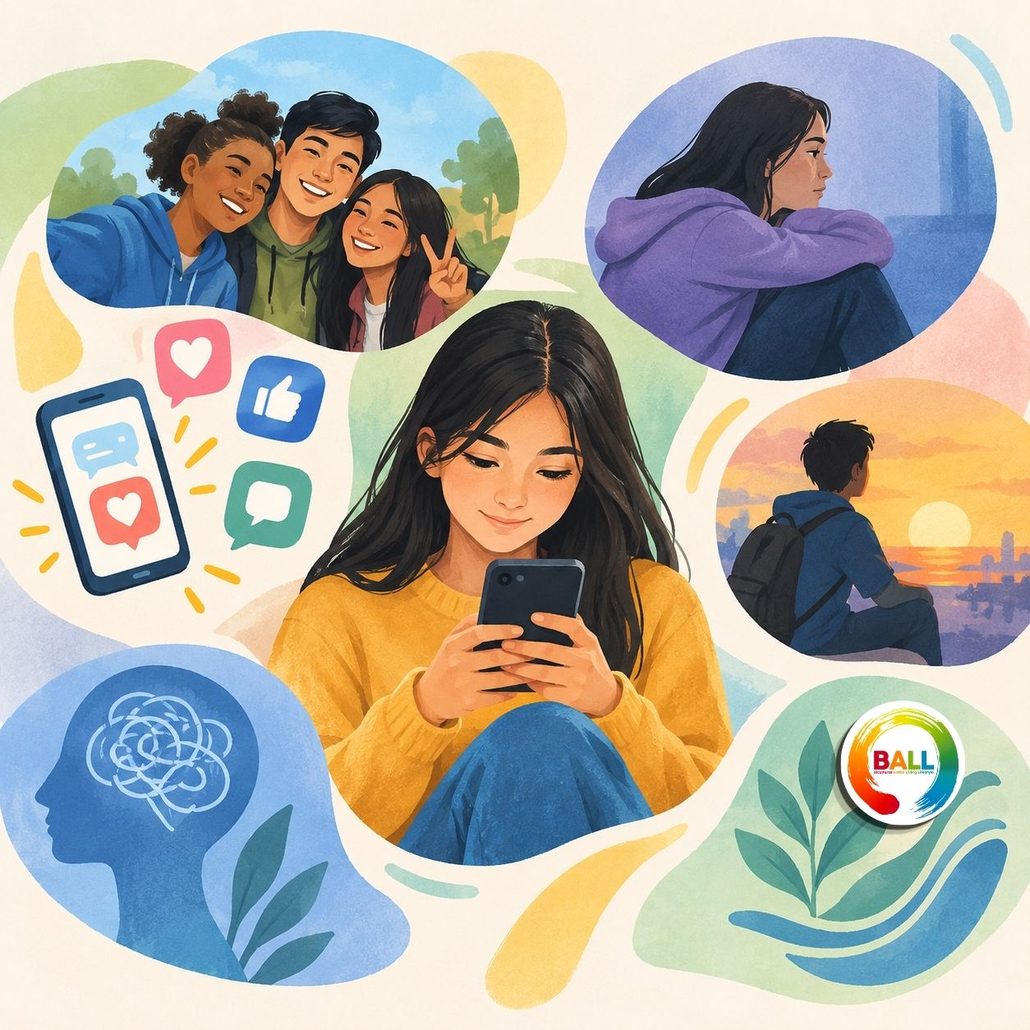
For some young people, social media can provide a sense of belonging. It can help them find others who share their interests or experiences. For others, social media may contribute to stress, loneliness, negative comparisons, or feeling pressured to look or live a certain way.
This means that simply counting the number of hours someone spends online may not tell the whole story.
It’s About More Than Screen Time
Researchers are looking beyond the question of how much time young people spend online. They are also interested in what young people are doing while they are online and how those experiences affect them.
For example, there can be a difference between spending time talking with a close friend and spending time scrolling through posts that make someone feel unhappy about themselves.
Social media can also change over time. New platforms, trends, and ways of communicating continue to appear, making it important for researchers to keep studying how these changes affect young people.
Finding a Healthy Balance
Social media isn’t necessarily something young people need to completely avoid. Instead, it can be helpful to pay attention to how it makes us feel.
If being online helps someone feel connected, supported, or inspired, that can be a positive experience. But if social media regularly leaves someone feeling stressed, isolated, anxious, or unhappy, it may be worth taking a break or talking with someone they trust.
Parents, teachers, caregivers, and other adults can also help by having open conversations with young people rather than simply focusing on how much time they spend on their phones.
The Bigger Picture
Mental health is complicated, and there is rarely one single cause.
Social media may be one part of a much bigger picture that includes friendships, family relationships, school, stress, sleep, physical activity, and other parts of everyday life.
Researchers are continuing to study these connections so we can better understand when social media may be helpful, when it may be harmful, and how young people can have healthier experiences online.
The goal isn’t simply to count screen time. It’s to understand how our time online affects our well-being.
This article is for general information and is not a substitute for professional mental-health advice.
Read the Original article here: https://medicine.yale.edu/news-article/social-media-and-youth-mental-health/?utm_source=chatgpt.com