
About Mental Health
Mental health is an important part of our overall health and well-being. It includes our emotional, psychological, and social well-being and affects how we handle stress, learn, work, build relationships, and participate in our communities. Mental health is closely connected to physical health, so taking care of both is an important part of living a healthy life.
Mental health is more than simply not having a mental health condition. It also includes having a sense of well-being, being able to cope with the challenges of everyday life, and having the opportunity to learn, work, connect with others, and thrive. A person can experience positive mental health while living with a mental health condition, especially when they have effective treatment, supportive relationships, and a safe and stable environment.
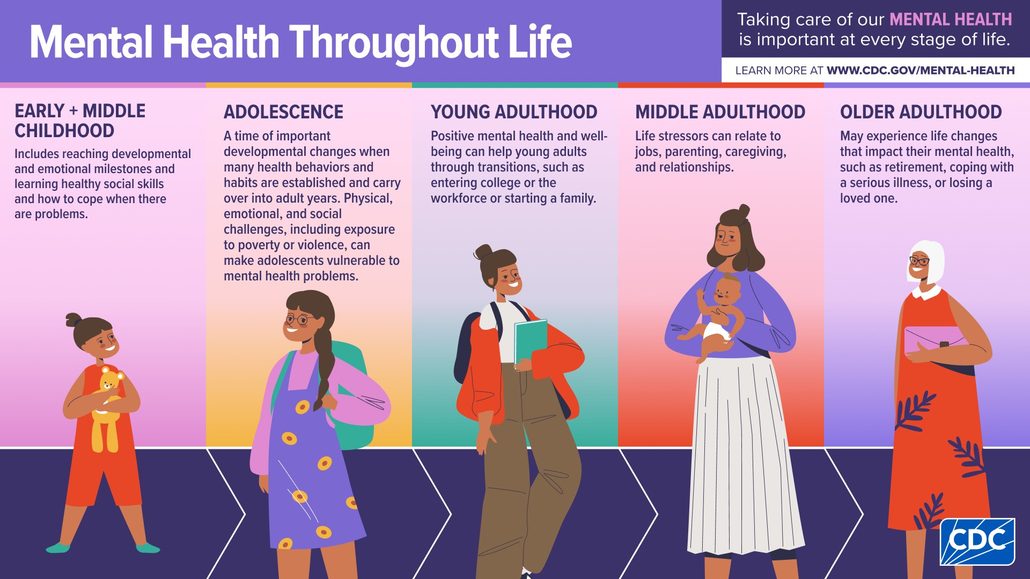
Mental Health Throughout Life
Taking care of mental health is important at every stage of life. Children develop emotional and social skills and learn ways to cope with challenges. During adolescence, young people experience significant physical, emotional, and social changes, while also developing habits that can continue into adulthood.
Young adults may face major transitions such as entering college or the workforce, finding housing, or starting a family. Adults may experience stress related to work, parenting, caregiving, and relationships. Older adults may experience changes such as retirement, serious illness, the loss of loved ones, social isolation, or loneliness. Each stage of life brings different experiences that can affect mental well-being.
What Influences Mental Health?
Mental health is shaped by many factors. These influences can come from an individual’s experiences, family, community, and broader society.
Some factors can increase the risk of poor mental health. These include social isolation, discrimination, difficult childhood experiences, interpersonal violence, limited access to housing, healthcare, education, or employment, ongoing health conditions, and difficulties with coping and emotional well-being.
There are also protective factors that can support positive mental health. Strong relationships and social connections, positive coping skills, safe communities, stable housing, education, employment opportunities, and access to healthcare and preventive services can all contribute to better mental health.
Importantly, experiencing a risk factor does not mean someone will develop a mental health condition. People can experience mental distress even when there are no obvious risk factors. This is why supporting mental health requires attention to both individual needs and the conditions in which people live.
Understanding Mental Health Conditions
Mental health conditions are common and can affect people of all ages and backgrounds. When symptoms are serious, persistent, and interfere with everyday activities, they may indicate a mental health condition.
There is no single cause for developing a mental health condition. A person may experience more than one condition, and symptoms may last for a short period or continue for a longer time. Mental health conditions can affect thoughts, feelings, behavior, or mood.
Most importantly, people living with mental health conditions can get better, recover, and thrive. Treatment and support can help reduce symptoms and improve quality of life. Reaching out for help is an important part of taking care of mental health.
Prevention and Community Support
Mental health support is not only about treating problems after they develop. Prevention also plays an important role. Public health efforts can help reduce risk factors, strengthen protective factors, and create environments that support mental well-being before problems become more serious.
Families, schools, healthcare providers, community organizations, and individuals all have a role to play. Building strong social connections, creating safe and supportive environments, reducing stigma, and making mental health information and services easier to access can help communities become healthier.
Mental health is something we all experience, and caring for it is important throughout our lives. By supporting one another, recognizing when someone may need help, and creating communities where people feel connected and supported, we can help promote better mental health for everyone.
Taking care of your mental health is not a sign of weakness—it is part of taking care of your overall health.
Source: Centers for Disease Control and Prevention (CDC), “About Mental Health,” updated August 20, 2026.
Read the full original CDC article here: https://www.cdc.gov/mental-health/about/index.html